Julia and Mandy said their goodbyes once the ship that took the Aardwelt truck spirited her away with the generic, cliché, blue light tractor beam pulling her up and away. And then in a millisecond the ship disappeared into the mountains.
Inside was a spacious cargo-hold. This saucer was a for mass transport, able to lift and carry ten times the weight of the cargo taken by the Jolly Rogers crew moments ago. It was also fitted with spatial distortion, creating more space on the inside than how the craft looked on the outside.
She looked at the truck first. She was curious about the system. Suspicious.
“Julia,” came a voice over the speakers. “Welcome back! Do you have time to catch up with us, or do you have more jobs coming up?”
She smiled. It was Jacob, a former member of the Jolly Rogers team, now living with her in Aos Sí. He remote controlled the ship back home, as she pondered the Aardwelt truck.
“I’ll be home for a few days,” she said. “I want to figure something out. Actually, I think you could help a lot with it.”
“I’d love to,” said Jacob, “Hangar doors are opening. We’re actually waiting to see you.”
“We?” said Julia, “Nathan and Karina?”
“Yeah,” said Jacob, “The gang’s all here. Maybe we could go get drinks, eat something…”
Julia hesitated. She wanted to, but the truck gnawed at her thoughts.
Was it Aos Sí tech?
Or something new?
Her father would want to know. He wasn’t keen on sharing tech with the humans in the first place but was interested in relations with the surrounding territories.
New Haven wasn’t exactly interested in technology; however they allowed a vote and the people wanted to have some of the comforts they left behind when they joined that community. The High Shepherd compromised but said that they would be monitoring what was appropriate for their people.
Julia thought they were incredibly closed-minded; however, it was a significant win to furthering relations. The New Haven people seemed backwards in a lot of ways, and she understood their overall mistrust. Many of them were Aos Sí, fairy-folk, and they remembered the past mistakes the Aos Sí committed.
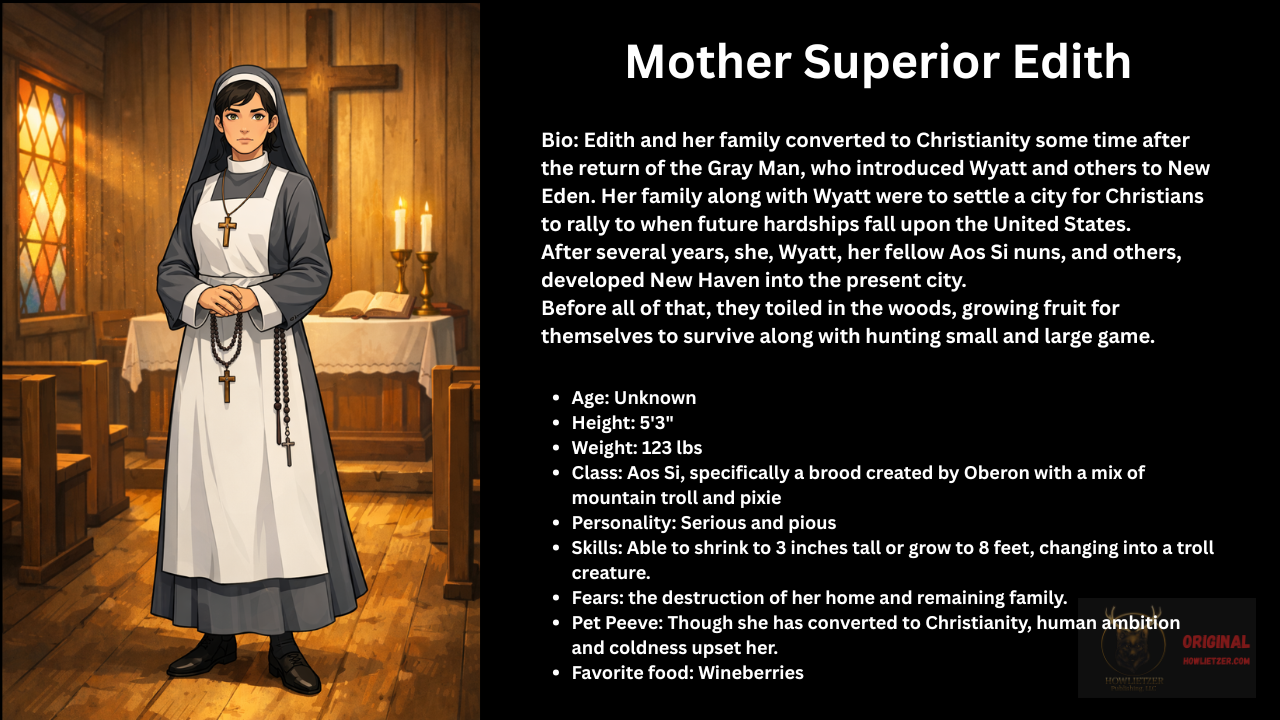
Every time she visited New Haven, she was personally escorted by Mother Superior, a fairy of an old clan. They were cordial with one another, but nothing deeper than a smile and watchful eyes—between both.
Jolly Rogers was a different story. They embodied much of what Aos Sí tradition valued: curiosity and mischief. She smiled as she thought of the fun talks she and Mandy had while watching the boys run amok.
She felt the ship land on its space and entering sleep mode: engaging the anti-gravity thrusters and powering off all other unnecessary functions.
The lights powered off and the front ramp of the ship slowly dropped, the light from the hangar pouring in. She heard them. Her friends just outside. They stepped on the ramp and their chatter became louder.
She needed to get her anti-gravity gloves to move the truck out.
She sighed. She had left her toolbox at the Jolly Rogers hangar.
“I feel like we always do what you want to do, Karina,” said Nathan, a bugbear. “It would be nice if we could do something else.”
“Firstly,” said the deceptively sweet voice of Karina, a very short kitsune, “I said we should let Julia decide since we haven’t seen her in a while, and I only mentioned that she really liked Poe’s Fusion, which just so happens to be my favorite place.”
“It’s not that deep, Nathan,” said Jacob.
“It really feels like you guys are always gaslighting me,” said Nathan.
“I’m your friend, Nathan,” said Karina, “I would never do that.”
Julia laughed to herself. “Hey everyone! It’s nice to see you.”
“It’s nice to see you too,” said Karina, “Uppies!”
Karina jumped into Julia’s arms and the performed the Aos Sí greeting, la bise—a kiss on both cheeks.
“Poe’s right?” said Karina. “Nathan thinks he knows everything.”
“I don’t think that,” said Nathan, “I just think Julia, might like something else. Maybe, you know, a shot in the dark, Kali’s Curry Bowl.”
“Ooh,” said Julia, “I forgot about Kali’s…”
Karina’s face became more fox-like as she bared her teeth at Nathan.
“I mean. I like Poe’s too…” Nathan’s voice trailed off.
Julia set Karina down. She smiled as she watched Karina bicker with Nathan.
“So,” said Jacob, stepping up with a la bise of his own, “What’s with the truck?”
Julia blushed. “Yes, the truck! I’m really curious about the inner workings. Bob mentioned it could be remote control, but how the triangle works out here, along with our signal jamming technology, I’m wondering how they were able to control it from such a long distance…”
Jacob smiled. “How are the guys?”
“Oh,” said Julia, she sometimes forgot Jacob was once one of them. “They have a new captain. Mark. He did splendidly on this latest heist.”
“Good for him,” said Jacob. “Any news on the Captain since we took him to New Haven?”
The Captain had received some medical attention from Aos Sí and though he was making significant progress, he’d decided that he wanted to be closer to home and asked to be relocated to New Haven to continue his recovery.
Their doctors didn’t think it advisable, however, the captain had become a bit crotchety in his old age and wouldn’t take no for an answer. Julia delivered him and planned to return with medicine on her next visit. She didn’t have a lot of faith in their “Prayer healing.”
“Nothing since I was last there,” said Julia. “I bet you could visit if you wanted.”
“I think the Captain would probably throw something at me if a two-time deserter visited him,” Jacob laughed.
Julia smiled. Jacob seemed to have a history of running away. She hoped he dropped the habit.
“So, Julia, come on,” said Nathan. “I’m hungy.”
“One last thing, Nathan,” said Julia, “We need to get this truck off the ship.”
“Don’t look at me,” Karina feigned innocence. “I’m baby.”
Julia laughed. “We may have to transform for this. I’m going to need all my strength…”
“I can help,” said Nathan walking towards the back of the truck, “It’s not too heavy, right?”
Julia assumed downward dog and then cat stretched into a large, long, golden-brown cougar creature with six legs. She cracked her neck and rolled her shoulders, a purr escaping her as her vertebrae popped and cracked.
“God! That hit the spot,” she said as she prowled towards the truck.
Nathan took his cue and transformed from his bear-like, goblin appearance to a large green bear with long shaggy fur.
“Shoot!” he winced, “I think I pulled something.”
“I told you, you need to start stretching,” said Julia as she assumed position in front of the truck. “Jacob, grab some rope and tie the truck to me. Nathan and I will pull it out.”
“You want me to push?” said Nathan, placing his large bear paws on the truck’s rear.
“That would be great, Nathan.”
Karina shrugged. “I guess I can help too.”
She transformed into a large nine-tailed fox and sidled up next to Julia. “We’re going to Poe’s, right?”
She nudge Julia in the ribs with her shoulder.
“Yeah, yeah,” Julia winced, “We can go to Poe’s.”
“Eat it, Nathan!” said Karina.
“I mean,” said Nathan, “I guess I’m going to. You both ready?”
This wasn’t the first time they had to pull things off a ship. Julia was notorious for forgetting her tools and there was never a spare set in the hangar. Jacob had stored supplies for them always at the ready.
Rope and harnesses fitted on Julia and Karina as they pulled. Jacob looped the rope around the truck cab, taking the steering wheel to help place the truck where it needed to go. Nathan pushed till the truck was safely off the craft.
Nathan transformed back and groaned, wiping sweat from his head. “I need to work out more often.”
“You can always join me,” Jacob smirked.
“That would entail getting out of bed at an ungodly hour.”
“I get up at 8am,” Jacob smiled.
Karina laughed hysterically.
“Listen,” said Nathan, “I have a very tight schedule, and we’re already way behind on dinner. I think we need to get going to Poe’s or wherever.”
“Yassss!” said Karina, “Me hungies!”
Julia and Karina changed back and the four exited the hangar.
The doors peeled open like petals at dawn.
Aos Sí revealed itself—not a city that rose, but one that grew.
Towering arboreal spires stretched skyward like sculpted redwoods, their bark smoothed into glasslike surfaces, their branches weaving into balconies, bridges, and luminous canopies. Bioluminescent sap pulsed beneath their skin, casting warm, living light across streets of dark, grounding soil that hummed faintly underfoot.
The city felt…awake.
They moved with its rhythm—past open-air markets where fae bartered in a dozen languages, past musicians playing instruments grown rather than built, past restaurants spilling layered aromas into the air: spice, sweetness, smoke.
Everything here was alive. Designed. Intentional.
Aos Sí did not house its people.
It welcomed them.
And somewhere within its living labyrinth of roots and light—
Poe’s waited.
Poe’s Fusion stood nestled within the hollowed trunk of a massive living tower, its entrance framed by curling wooden arches that twisted like calligraphy. Soft red lanterns—grown, not hung—bloomed from the walls, their glow shifting subtly with the pulse of the tree.
Inside, the space opened wide and warm.
Tables formed naturally from polished root clusters, their surfaces smooth as stone but faintly warm to the touch. Vines coiled overhead, strung with bioluminescent bulbs that flickered like lazy fireflies. The air was alive with motion—servers weaving between tables with practiced grace, trays balanced effortlessly, while a living kitchen wall behind the bar rippled and shifted as ingredients were grown, harvested, and plated in real time.
The scent hit first.
Soy, citrus, chili oil, roasted peppers, garlic, star anise—an impossible harmony.
A chalkboard grown from flattened bark displayed the specials, its letters shifting slightly as if the menu itself were breathing:
- Dragonfire Dan Dan Tacos – spicy pork, numbing peppercorn crema
- Five-Spice Carnitas Bao – crispy, sweet, dangerously addictive
- Jade Guacamole with Ginger-Lime Crisp
- Hot & Sour Tortilla Soup
- Wok-Seared Fajita Noodles
Julia dug into her appetizer—southwestern egg rolls—each bite crisp, smoky, and alive with flavor. Compared to New Haven or Jolly Rogers, Aos Sí cuisine didn’t just feed you—it celebrated you.
Nathan did not hesitate once his entrée arrived: beef lo mein burrito with sliced avocado and refried beans. He had a habit of scarfing down his food a little too eagerly and tonight was no different.
Karina snatched at his plate, smirking as her fingers nicked an avocado slice that she hastily stuffed in her mouth.
“Karina!” Nathan roared, his towering form shadowed her smirking face.
“Relax, Nathan!” she said. “There’s plenty of avocados…”
Julia laughed as she dug into her general tso’s chicken flatbread, the sweet heat balanced perfectly against the crisp crust.
“So what’s your theory on the truck?” Jacob laughed as he sipped his Sweet Barley Beer—a local brew that shimmered faintly gold, tiny bubbles drifting like pollen in sunlight.
Julia loved talking shop.
“Oh! I don’t know,” she stated. “There’s something about it that is puzzling, so I wanted to take a closer look at it.”
“What’s puzzling about it?”
Before Julia could answer, the front doors parted.
The music softened.
Conversations dipped—not stopped, just…shifted.
Aos Sí police stepped inside.
“Julia Legrand?”
She stood.
“The King has summoned you.”