Tag: writing fiction

  • Rewriting Your Novel for Best Results

    I know what you’re thinking. It’s been a while since I’ve seen a post from this Howlietzer guy. Where the heck has he been? Did I follow this schmuck for nothing? Well, I finally have another post, but let me tell you about my long absence.

    Some of you might have guessed based on my fiction posts that I have a lot of novels in the works. Well, I finally sat down and finished one. It will be available soon, and I’ll keep you updated. I hope you love urban fantasy! Actually, for those of you that were reading my BMCR series, it’s that. The first instalment. Meet all your friends: Daryl Kearns, Henry Gaines, Nadia Baranski, and Olivia Poseidon, like you’ve never seen them before, printed in a traditionally published book with illustrations and, you know, the same things you can expect from the books these days.

    You’re probably saying, well gee Howl, that’s great, but what does that have to do with REWRITING FOR THE BEST RESULTS? Well, I’m glad you asked. That’s what I’ve been spending my time on instead of here.

    The importance of editing and rewriting your manuscript can not be stressed enough. You need to go over your work to make sure words are spelled right as well as if you are using the right word; make sure your sentences make sense, that they flow, and are not cumbersome; make sure you’re using the right format, many editors will trash your manuscript if you can’t follow the simple rules they layout for you before you submit.

    It may seem arduous, but it’s really not that hard. Did it have me crying some days? Yes! But then what will make you cry more as a writer if 1. no one reads it and 2. it’s borning and no one understands what you’re trying to say.

    When it comes to editing, you need to find someone who reads a lot and can offer criticism to your work. Another set of eyes is paramount to helping you succeed; they’ll help you find problems that you didn’t notice before.

    After you’ve chosen this very special person to rip apart your work and totally break your spirit as a writer, you’ll need to pull yourself together and remember you asked them to do it. Then after a mental health day, look at their list of corrections and reread your manuscript. You need to comb over every paragraph and decide whether or not it makes sense as well as if there is enough there for a reader to grab hold of. Nothing is worse than a book that leaves the reader confused.

    You do not need to take every criticism to heart. Some of the suggestions that will arise are simply because your reader did not understand. If they don’t understand, neither will a complete stranger who decided to pick up your book.

    Therefore, it is my opinion that the author to be should strive to increase the clarity and succinctness in their final manuscript.

    What is clarity? When looking to increase the clarity of your manuscript, you need to rely heavily on your chosen reader. The questions they have are more than likely going to be the same questions all readers have, so when going through their suggestions, really consider how each paragraph sounds.

    There are some exceptions. Your Audience is a big factor in how clear you are. One problem my beginning manuscript had was the use of the word phasing to mean passing through objects. My chosen reader did not understand that use of the word, but I know that my audience would.

    As many of you know I like Fantasy and Urban fantasy type of books. The construction of the worlds, the limits of magic, the superpowers of individuals, many of these can elicit further clarity. So what a writer will have to do is scrutinize their word choices as well as ask the question, “Am I conveying what I want to convey here?” You may want to ask several readers to look at your work; the more the merrier, and more importantly you may want to ask a member of your audience to give it a read so that you know for sure if they understood.

    Succinctness is then applied to your novel, specifically making it as clear as you can with as little words as possible. And it most cases little words. Using larger words is fine is some cases; if your audience is mostly adults you’ll be able to get away with it more. But in some cases, it can be overdone. It’s best, in this writer’s opinion, to use more conversational words, however, I consider myself more of the everyman. More avid readers like big words. So take this bit as you do your corrections from your chosen readers: they are important to look at, but not always necessary to fix your work.

    I hope that was helpful. And please go ahead and leave a like, consider subscribing, and below tell me your thoughts on the rewriting process. I’d love to read your comments on the subject and hopefully, we can help each other out.
  • How to Set Up the Foundation of Your Storybook World

    How to Set Up the Foundation of Your Storybook World

    As he put his hand to the door-knob Winston saw that he had left the diary open on the table. DOWN WITH BIG BROTHER was written all over it, in letters almost big enough to be legible across the room. It was an inconceivably stupid thing to have done. But, he realized, even in his panic he had not wanted to smudge the creamy paper by shutting the book while the ink was wet. He drew in his breath and opened the door. Instantly a warm wave of relief flowed through him. A colourless, crushed-looking woman, with wispy hair and a lined face,was standing outside. ‘Oh, comrade,’ she began in a dreary, whining sort of voice, ‘I thought I heard you come in. Do you think you could come across and have a look at our kitchen sink? It’s got blocked up and——’ It was Mrs Parsons, the wife of a neighbour on the same floor. (’Mrs’ was a word somewhat discountenanced by the Party—you were supposed to call everyone ‘comrade’—but with some women one used it instinctively.) She was a woman of about thirty, but looking much older. One had the impression that there was dust in the creases of her face. Winston followed her down the passage. These amateur repair jobs were an almost daily irritation. Victory Mansions were old flats, built in 1930 or thereabouts, and were falling to pieces. The plaster flaked constantly from ceilings and walls, the pipes burst in every hard frost, the roof leaked whenever there was snow, the heating system was usually running at half steam when it was not closed down altogether from motives of economy. Repairs, except what you could do for yourself, had to be sanctioned by remote committees which were liable to hold up even the mending of a window-pane for two years…

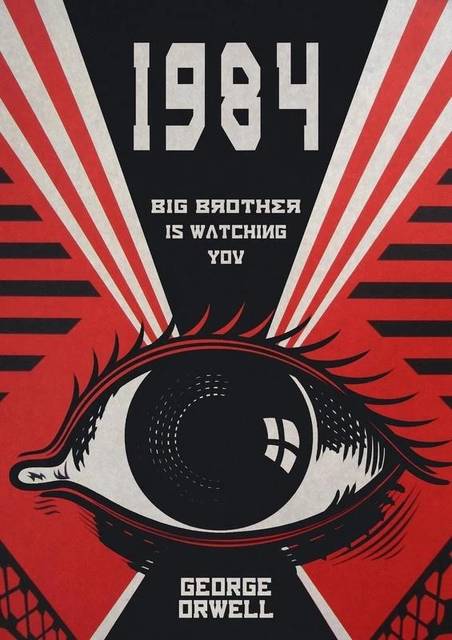
    That was taken from George Orwell’s book 1984, a dystopian novel showing the world as one of war and hate that, I imagine, sprang up from a very loud rebellion or protest by the groups that shouted the loudest–their governments ignoring the other groups entirely…

    I could go on how I feel 1984 is a good example of what COULD happen if the US doesn’t calm down, but that’s not what I want to talk about here. George Orwell does a great job of setting up his dystopian society with the use of setting. In the excerpt above, we have our main character going over to his neighbor’s apartment to fix a clogged sink, and we are given extraordinary details on the state of the building in which they live.

    Orwell does this throughout his book, and it’s really important when discussing the type of social-political climate his novel takes place, which leads me to this thesis statement: setting is as important as your main characters in any story.

    Think about it like this: Harry Potter, without the backdrop of Hogwarts, wouldn’t have been as magical an adventure had Harry grew up in his Uncle’s stairwell cupboard.

    So what questions do you need to ask when creating your setting?

    What year does this take place?

    1984 was written in 1949. It took place in the future of when it was written, and so took on the characteristics of what Orwell believed COULD happen based on his experiences. But what’s really important about 1984 is that Orwell has created a new government, with new ministries, new histories, new EVERYTHING.

    He then expounds on what that would look like, which is exactly what the reader needs to know when travelling to a brand new world. We see plainly Mrs Parson’s clogged sink and the old building this scene is taking place. We see Winston, the main character, walking down the streets constantly worried about being followed by Thought Police and spies. This futuristic, socialist government run by the enigmatic Big Brother has most of the citizens scared for their lives and walking on eggshells lest they do something that goes against the party.

    Simply put, there is no freedom in the world of 1984, there is only duty to Big Brother, and Orwell does a great job convincing the reader that though some may hate it, they put up with it for the sake of their lives. A scary world to live in.

    Is the setting fictional or based on reality?

    I mentioned Harry Potter earlier. Obviously, the world of Hogwarts is fictional, but how many of us wanted to receive a letter of acceptance by owl? JK Rowling did a tremendous job of taking us from Platform 93/4s to Hogwarts School of Magic, and in her books, she had various descriptions of magical creatures and the magic spells performed by wizards and witches alike.

    1984 is fictional as well (obviously since we live in 2020), but the point is the more foreign, the more you will need to know about your setting and the rules that govern it. You will need characters to provide anchoring points for the main character, as those are typically the eyes you will be looking from in whatever story you are reading. Hermione Granger, though not of wizard descent, was able to give advanced explanations to Harry about magic. Likewise, Ron was able to guide him in wizard society norms as well as introducing him to so many applications of magic.

    When it comes to fiction, the skies the limit, however, it also takes a lot of extra work to create the setting for the characters to play in. The work is fun though, and if your imagination is vast you won’t have much of a problem. A little something that I would like to mention, just as we in our society have rules, so do these fictional worlds. There were laws of magic in Harry Potter; there are rules in 1984; without them, there are no boundaries, no villains, and no consequences.

    Settings based on real places are a little easier. We have rules in our world that are easily understood across nations. You don’t have to go into too much detail on specific scenes, for example: a class room. Most of us have been in one. We see rows of chair-desks with a teacher’s desk in the front of the room, light detail is all that is required. When describing that one teacher that does what she wants, you can be topsy-turvy, like cray Miss Frizzle and her Magic School Bus.

    Both types of setting are good, but stories are all about those outliers with an interesting story to tell. Me, I love fiction, specifically paranormal, but there are obviously different likes across the world. Some like non-fiction stories, or fiction so deep-set in reality that the likes of Harry Potter don’t exist. But good stories are good as long as your setting grounds the reader in a logical place.

    What are the people like in your society?

    I’ve touched on this a little already, but it really is important. Grounding your reader in a reality is a big part of setting, and there is a slew of characters with differing viewpoints in your world. You may not agree with them, but they add to the flavor of your book. (Why You Should Become Your Character’s Creepy Stalker)

    Your society has rules. People either follow them or make their own rules. Most people are not pure chaotic. There is a type of order to them, patterns behaviors. In the book 1984, the protagonist Winston is seeking true history. He has changed so much of the public record, erasing history that he doesn’t know what is real anymore. So he is on a journey of freedom with a woman named Julia. They break all the rules together, finding freedom in each other and a new lust for life; Winston was humdrum and fearful, but as the book progresses he becomes bolder and discovers desire.

    There is danger there, the consequences are high in the world of 1984. Both he and Julia run the risk of being erased and forgotten… That’s what makes the story interesting. Conflict! Desire! How will these characters meet their needs in the story and how will society react to the actions of these characters?

    Final Note

    Setting is a pivotal piece in shaping the plot and characters of your story. Without it you have a plain backdrop that doesn’t move the character into action or progress the plot. Knowing the rules and foundation of your setting will greatly improve your effectiveness in storytelling and give a reliable and realistic set of actions and consequences for your characters regardless of their social standards and those they interact with.

  • 5 Helpful Strategies to Make You a Better Writer

    Growing up, I hated reading and writing. I received horrible scores in my English class. But as I got older, I became enraptured with creative writing. It didn’t happen until I was in high school and a partner and I wrote a short story for our class. I was immediately hooked on the idea of becoming an author, but I had a lot of challenges ahead of me that, at the time, I was unaware of.

    At first, I thought I would just have a knack for it, but that wasn’t the case. I had to work hard at getting to the point that I am now, and I would have to say there is still room for improvement. For now, I want to share 5 actions, I’ve taken, to become a better writer.

    Conquer Fear:

    The first action you should take as a writer is to conquer your fears. I’m not talking about skydiving, though that would be a great step later down the road. The most common fears, when it comes to writing, are as follows:

    1. Fear of not Being Heard
    2. Fear of Making Mistakes
    3. Fear of Wasting Time

    You may be bombarded with voices in your mind saying that what you have isn’t good enough. Or that your story isn’t interesting enough. You may even start to compare yourself to other authors and believe that you can’t do what they did. The fact is, yes you can! Now, will you be as successful? Who knows… But you’ll never know until you put yourself out there, and nowadays writing online you enjoy a certain amount of anonymity. Make mistakes! Write! Sit in front of your computer for hours, thinking… It isn’t a waste of time. While I write my fiction, sometimes I have to sit and think for a while to discover a major plot point. Or to decide exactly what a character’s motivation is. Sometimes I have to write for hours to finally figure out what I really want to write. Sometimes I delete major paragraphs that sounded good last week but are not so good the next. 

    Writing is a process, and the best advice I can give is to WRITE! Write, delete, mull it over in your mind, take a day off, but don’t give up if you have a story that you feel strongly about.

    Reading:

    I hope you enjoy reading. I do and I don’t. I have a hard time, sometimes, continuing on with a book. Sometimes my mind drifts elsewhere and I have to take a break. This is ok, but you do need to set a time to read every day, be it fiction or non-fiction. There are plenty of blogs out there to read, and many are very interesting. Seek them out, read them, and comment. This is a good way to start your brand and get noticed by other readers and authors. 

    But most importantly, reading will help you become a better writer by reading how other authors write. You will read so many different styles and you’ll decide which style works for you. You will read some authors who write scenery really well or others who write expressive dialogue. You will learn from reading and you will mimic what you like until you find your unique voice. Set some time to read.

    Writing:

    Duh… So writing is definitely the number one thing to do if you want to become a better writer. Take a seat, get comfortable and start writing the first thing that comes to mind. Do not worry about it sounding good. You can delete later. What I’ve found out from writing is that sometimes I start out writing something blah, and then some light bulb goes off and I start writing something glorious. 

    Do your best to write something every day. As I’ve mentioned, there may be days where you do sit in front of your chosen writing apparatus and NOTHING comes. That is ok. You’re only a failure if you stop trying. And failure isn’t bad either. It helps you decide what is worth fighting for. If your story is worth fighting for, WRITE it. Even if it takes 20 years, WRITE it. You’ll have bad days and good ones.

    Setting Goals:

    Setting goals is key. You’ll want to set time frames. Personally, I set aside 2 hour writing slots a day. 1 hour reading. Now depending on what I’m reading, I may take more time. Having a routine will help. Again, personally, I am the type who spurns routine. I have to mix things up sometimes. That’s not bad. If routine hurts you, don’t do it. But beware, routine is a structurally good way to get better at anything. If you can grind through the pain, eventually that pain will lessen every week. You will begin to do things you didn’t know you could once you focus your mind on the goal and not the pain.

    If 1000 words is painful, DO IT! If you 2000 words is painful, DO IT! No pain, no gain. You have to push yourself to achieve. This may mean a ROUTINE. :) But, I assure you, if you stick with it, you will meet the goal. Decide when you want to finish. Decide if that is feasible. Don’t set yourself up for failure. Make reasonable goals. But also know that failure is only fatal if you give up entirely.

    Research:

    Write what you know. If you don’t know, research. It’s why reading is important. I love supernatural stories. I’ve had several experiences growing up, but I still have a lot of research to do. Research is also a good way to destroy writer’s block. Often what blocks you is a misunderstanding of your characters or even the plot. Research can give you inspiration. What are you writing about? Do you know anything about that? If no, then google it. We all google it! Don’t be discouraged, learn something new. I know a lot about cryptids, but I still learn new things every day, because I’m passionate about it. In short: research what you like; write what you know; and enjoy what you write.

    I hope this was useful to anyone out there struggling. I know all about the struggle, and sometimes I need a little reminder on how I can eliminate obstacles. By implementing these five actions, I’ve been able to keep my writing flame burning and will to succeed alive.