Tag: writing

  • How to Dissect Your Characters for Stunning Stories: A Philosophical View

    What’s Cooking, Future Authors!

    Here we are, wrapping up our character deep-dive. I won’t lie; this one’s a doozy. And hey, I’m all ears if you’ve got some golden nuggets to sprinkle in.

    Life Through Their Eyes: Ever wonder how your character vibes with life? Is it a mad sprint to the finish line? An endless party? Or maybe, just maybe, they’re in the “what’s the point?” camp.

    Here’s the kicker: whether they’re aware or not, they’ve got a philosophy. Yep, their very own lens on life. Just like us! Let’s be real; it’s a tangled web for most of us. Unraveling it? Well, that’s a journey – both for you and your character.

    Peek into their soul, and you’ll see it align with their actions, their quirks, their very essence. Their words? A dead giveaway. If you’re vibing on genius level, their philosophy might just set the tone for their entire dialogue.

    Now, I know we’re diving deep here. I’m trying to get a grip on it myself. Right now, I’m digging into this piece: How to Discover Your Personal Philosophy in Three Steps. Three steps sound sweet, but let’s see how that pans out, yeah?

    Here’s the deal: use this nugget as you see fit. Maybe it sparks a revelation for your characters, maybe not. Either way, understanding their worldview? Total game-changer when they’re facing the big challenges in your tale.

    I’m not saying whip up a life philosophy in the time it takes to make instant noodles. That’d be bonkers! But mull over it, okay? There’s some magic there.

    That’s a wrap on our character chat! Did it resonate? Drop your thoughts below, and let’s keep this convo going. What do you want to unravel next? I’m thinking plot and setting – sound good?

    Give that like and subscribe a click, and let’s keep this party rolling. More than anything, I wanna hear your voice. Let’s grow together, one word at a time!

  • How to Dissect Your Characters for Stunning Stories: The Struggle is Real

    Hey Future Authors! Round Three, Ready?

    We’re back with more character chatter, and this time, it’s about the biggie: The Epic Showdown. You know, the heart-pounding, edge-of-the-seat kinda moment in your story.

    Remember all those tidbits we’ve dug up about our character? The quirks, the past drama, the love-hate relationships? Well, it’s showtime! All those pieces come together, building up to this epic climax.

    Ask the Million-Dollar Question: What’s burning deep inside your character? Their deepest desire, their ultimate goal? That’s the essence of their battle. If they’ve got nothing to fight for, then, well, it’s just a whole lot of yawns. But if they’ve got dragons to slay (literally or metaphorically), we’re cheering them on, big time.

    Now, the burning question: Win or Lose? Do they emerge victorious, or does life knock them flat? Now, I get it; everyone loves a champion. But sometimes, there’s magic in the mess-ups too. Maybe it’s not their time to shine yet. Maybe they’ve got bigger battles ahead (sequel, anyone?). Either way, it’s all about the journey.

    And speaking of journeys, that’s your story! Let’s go on this wild ride with them, soaking in the highs, the lows, and everything in between. The roadmap? Just tap into your character’s soul, their motivations, their fears, and voila! You’ve got a journey worth reading.

    Okay, okay, I know I might’ve gone all dramatic there. But hey, that’s how I feel about characters! Rooting for them, cheering them on, or simply giving them a nudge when they’re down.

    Got a light bulb moment? Fantastic! Don’t forget to smash that like and subscribe button for our final pow-wow in this series. And spill your character beans below. Nothing beats tips and tricks from fellow story spinners. Let’s make magic, one character at a time!

  • How to Dissect Your Characters for Stunning Stories: A History

    Hey Future Authors! Back at It Again!

    Jumping right back into our deep dive on Howlietzer, this is the sequel to our chit-chat about characters. Trust me; we’re ramping things up from our last cozy chat.

    So, what’s next on our character checklist? Drumroll, please… It’s History!

    Hold up, I’m not saying you need to pen down a hefty biography or anything. But a few thoughtful nudges? Definitely a game-changer. Let’s play 20 questions (or… maybe a bit less):

    1. Kickoff Point: By the time your story rolls the opening credits, what’s gone down in your character’s life? Think age, pre-story shenanigans, fashion choices, attitude… What’s the story before THE story?
    2. The Deep Past: Your character didn’t pop into existence at page one, right? So, what made them… them? Their backstory intertwines with their present. It’s like life – yesterday influences today.
    3. Raising ‘Em Up: Picture their younger days. Got the parental units in the picture? Or maybe someone else pulling the strings? The VIPs from their past? Yep, they’ve left their mark. Are those folks still hanging around? What’s the love-hate meter looking like?
    4. Life Before ‘Now’: Were they slinging spells in wizard school? Maybe clocking in at a dead-end gig? Or engrossed in some wild hobby? Do they still jam to their old tunes or have they shuffled their playlist?
    5. Passion Points: Dive into their likes, loves, and absolutely-nots. It’s all in the details.

    Look, scribble down some scenarios, pop those headphones in, and vibe with your character. Walk a mile (or ten) in their shoes.

    The golden rule? There’s no rush. You don’t need all the answers right off the bat. Writing’s like cooking; sometimes it’s the second, third, or heck, the tenth time before it tastes just right. So, tweak, twist, and turn until you and your readers feel that connection.

    Found this chat useful? Smash that like and subscribe! Stay tuned for our next character tête-à-tête. And hey, spill your character beans in the comments. Let’s share and grow together!

  • How to Dissect Your Characters for Stunning Stories: 101

    Hey Future Authors! What’s Up?

    For me, I finally wrapped up my first book! Right now, I’m shooting it out to agents. Fingers crossed!

    Characterization 101

    For November, I’m working on a characterization series. Something that really impeded me while writing my novel was not understanding or knowing my characters well enough. I wasn’t my character’s creepy stalker after all.

    Now what I am about to introduce is something that I hope helps you think critically about your characters. As I stated before, a character is a person, and you want to make them as authentic as possible. But there are a lot of character sheets out there, and some of them are incredibly long. As I stated in my previous post, I use them as a guideline, but what I have developed for my characters comes from meditation on the essence of “character.”

    I’m looking to write four posts on what I have decided to be the best things to know about your character, and it isn’t a 100 question survey. 

    I have eight concepts for you, as a writer, to flesh out on your own. It will give you the foundation for your character and their arc through your story.

    Please leave your opinions in the comments. I look forward to reading them.

    Now because I have devoted a lot of words to this introduction, I am going to recommend you start with these EASY concepts first in developing your characters:

    Here’s the Lowdown

    1. On the Outside: Simply create an image of your character. If you can draw, go for it! What do they wear? What is their race? Are their clothes new or old? Do they have any scars, tattoos, piercings, any distinguishable qualities that set them apart? Are they tall, short, round, or skinny? These questions are somewhat easy to answer. Most of us have an idea of what our characters look like, but most of us don’t think about how these features affect our character’s perception of themself.
    2. On the Inside: Most people are insecure about something. Usually, it is physical something that we can either control or can’t control. Maybe it was something in their past that made them ashamed or proud. We’ll talk about history in another post. Is your character confident? Do they see themselves as better than everyone else or the worst person on earth? Maybe they don’t think about their place in the world and are just rash Anime protagonists. How the character views themselves determines what type of actions they will take throughout your story. Some characters will remain in the background, and your main character must be front and center and be interesting enough to hold a reader’s attention. And because your main character is front and center, they will be more susceptible to the ire and ridicule of other characters.
    3. What’s the Buzz?: Ire and ridicule may not be how other characters react to your MC, but knowing how others view them will help establish the world and struggles your MC, and other characters deal with in the story. How does your main antagonist feel about your characters, and why? If there is hate, there has to be a reason, even if the cause is flimsy. Maybe your other characters find your MC annoying or stupid. What makes them see the MC like that? Why have they arrived at the conclusion they have come to? Don’t worry. A lot of this is fleshed out in plot and setting. If you can’t answer these now, there is always time. Do not be in a rush to know everything before you begin typing. Many of the answers will come to you while you are amidst the action of the story.
    4. Yay or Nay: Think of it this way: We all have stuff we like and stuff we can’t stand. Maybe your character is all about that pineapple pizza or perhaps they’d rather eat cardboard. These thing propel your character or repel them! Tiny things? Maybe. But always relevant to an authentic character.

    To Wrap It Up

    When you hit that dreaded writer’s block (ugh, we’ve all been there), take a chill pill and revisit these questions. Tweak them, play with them, have a ball. It’s all about getting into your character’s headspace. And note, there’s still more to come if this didn’t get your brain-cogs turning.

    Thoughts? Let me know in the comments!

  • How to Set Up the Foundation of Your Storybook World

    How to Set Up the Foundation of Your Storybook World

    As he put his hand to the door-knob Winston saw that he had left the diary open on the table. DOWN WITH BIG BROTHER was written all over it, in letters almost big enough to be legible across the room. It was an inconceivably stupid thing to have done. But, he realized, even in his panic he had not wanted to smudge the creamy paper by shutting the book while the ink was wet. He drew in his breath and opened the door. Instantly a warm wave of relief flowed through him. A colourless, crushed-looking woman, with wispy hair and a lined face,was standing outside. ‘Oh, comrade,’ she began in a dreary, whining sort of voice, ‘I thought I heard you come in. Do you think you could come across and have a look at our kitchen sink? It’s got blocked up and——’ It was Mrs Parsons, the wife of a neighbour on the same floor. (’Mrs’ was a word somewhat discountenanced by the Party—you were supposed to call everyone ‘comrade’—but with some women one used it instinctively.) She was a woman of about thirty, but looking much older. One had the impression that there was dust in the creases of her face. Winston followed her down the passage. These amateur repair jobs were an almost daily irritation. Victory Mansions were old flats, built in 1930 or thereabouts, and were falling to pieces. The plaster flaked constantly from ceilings and walls, the pipes burst in every hard frost, the roof leaked whenever there was snow, the heating system was usually running at half steam when it was not closed down altogether from motives of economy. Repairs, except what you could do for yourself, had to be sanctioned by remote committees which were liable to hold up even the mending of a window-pane for two years…

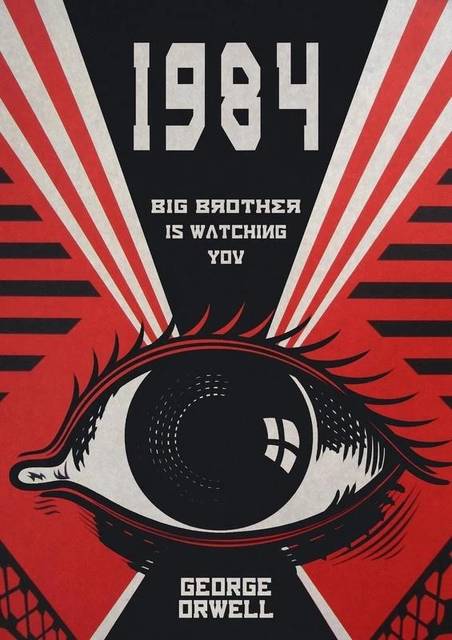
    That was taken from George Orwell’s book 1984, a dystopian novel showing the world as one of war and hate that, I imagine, sprang up from a very loud rebellion or protest by the groups that shouted the loudest–their governments ignoring the other groups entirely…

    I could go on how I feel 1984 is a good example of what COULD happen if the US doesn’t calm down, but that’s not what I want to talk about here. George Orwell does a great job of setting up his dystopian society with the use of setting. In the excerpt above, we have our main character going over to his neighbor’s apartment to fix a clogged sink, and we are given extraordinary details on the state of the building in which they live.

    Orwell does this throughout his book, and it’s really important when discussing the type of social-political climate his novel takes place, which leads me to this thesis statement: setting is as important as your main characters in any story.

    Think about it like this: Harry Potter, without the backdrop of Hogwarts, wouldn’t have been as magical an adventure had Harry grew up in his Uncle’s stairwell cupboard.

    So what questions do you need to ask when creating your setting?

    What year does this take place?

    1984 was written in 1949. It took place in the future of when it was written, and so took on the characteristics of what Orwell believed COULD happen based on his experiences. But what’s really important about 1984 is that Orwell has created a new government, with new ministries, new histories, new EVERYTHING.

    He then expounds on what that would look like, which is exactly what the reader needs to know when travelling to a brand new world. We see plainly Mrs Parson’s clogged sink and the old building this scene is taking place. We see Winston, the main character, walking down the streets constantly worried about being followed by Thought Police and spies. This futuristic, socialist government run by the enigmatic Big Brother has most of the citizens scared for their lives and walking on eggshells lest they do something that goes against the party.

    Simply put, there is no freedom in the world of 1984, there is only duty to Big Brother, and Orwell does a great job convincing the reader that though some may hate it, they put up with it for the sake of their lives. A scary world to live in.

    Is the setting fictional or based on reality?

    I mentioned Harry Potter earlier. Obviously, the world of Hogwarts is fictional, but how many of us wanted to receive a letter of acceptance by owl? JK Rowling did a tremendous job of taking us from Platform 93/4s to Hogwarts School of Magic, and in her books, she had various descriptions of magical creatures and the magic spells performed by wizards and witches alike.

    1984 is fictional as well (obviously since we live in 2020), but the point is the more foreign, the more you will need to know about your setting and the rules that govern it. You will need characters to provide anchoring points for the main character, as those are typically the eyes you will be looking from in whatever story you are reading. Hermione Granger, though not of wizard descent, was able to give advanced explanations to Harry about magic. Likewise, Ron was able to guide him in wizard society norms as well as introducing him to so many applications of magic.

    When it comes to fiction, the skies the limit, however, it also takes a lot of extra work to create the setting for the characters to play in. The work is fun though, and if your imagination is vast you won’t have much of a problem. A little something that I would like to mention, just as we in our society have rules, so do these fictional worlds. There were laws of magic in Harry Potter; there are rules in 1984; without them, there are no boundaries, no villains, and no consequences.

    Settings based on real places are a little easier. We have rules in our world that are easily understood across nations. You don’t have to go into too much detail on specific scenes, for example: a class room. Most of us have been in one. We see rows of chair-desks with a teacher’s desk in the front of the room, light detail is all that is required. When describing that one teacher that does what she wants, you can be topsy-turvy, like cray Miss Frizzle and her Magic School Bus.

    Both types of setting are good, but stories are all about those outliers with an interesting story to tell. Me, I love fiction, specifically paranormal, but there are obviously different likes across the world. Some like non-fiction stories, or fiction so deep-set in reality that the likes of Harry Potter don’t exist. But good stories are good as long as your setting grounds the reader in a logical place.

    What are the people like in your society?

    I’ve touched on this a little already, but it really is important. Grounding your reader in a reality is a big part of setting, and there is a slew of characters with differing viewpoints in your world. You may not agree with them, but they add to the flavor of your book. (Why You Should Become Your Character’s Creepy Stalker)

    Your society has rules. People either follow them or make their own rules. Most people are not pure chaotic. There is a type of order to them, patterns behaviors. In the book 1984, the protagonist Winston is seeking true history. He has changed so much of the public record, erasing history that he doesn’t know what is real anymore. So he is on a journey of freedom with a woman named Julia. They break all the rules together, finding freedom in each other and a new lust for life; Winston was humdrum and fearful, but as the book progresses he becomes bolder and discovers desire.

    There is danger there, the consequences are high in the world of 1984. Both he and Julia run the risk of being erased and forgotten… That’s what makes the story interesting. Conflict! Desire! How will these characters meet their needs in the story and how will society react to the actions of these characters?

    Final Note

    Setting is a pivotal piece in shaping the plot and characters of your story. Without it you have a plain backdrop that doesn’t move the character into action or progress the plot. Knowing the rules and foundation of your setting will greatly improve your effectiveness in storytelling and give a reliable and realistic set of actions and consequences for your characters regardless of their social standards and those they interact with.